

Why do some people tan easier than others?
Fitzpatrick Skin Scale & Melanotan 2 | Skin Type & Tanning
Have you ever wondered why some people seem to tan easily while others burn after only a short time in the sun?
The answer is partly related to skin type. Everyone’s skin responds differently to ultraviolet (UV) radiation, and understanding your natural skin type can help you better understand how your skin may react to sun exposure and tanning.
One of the most widely recognised systems for classifying skin types is the Fitzpatrick Skin Scale.
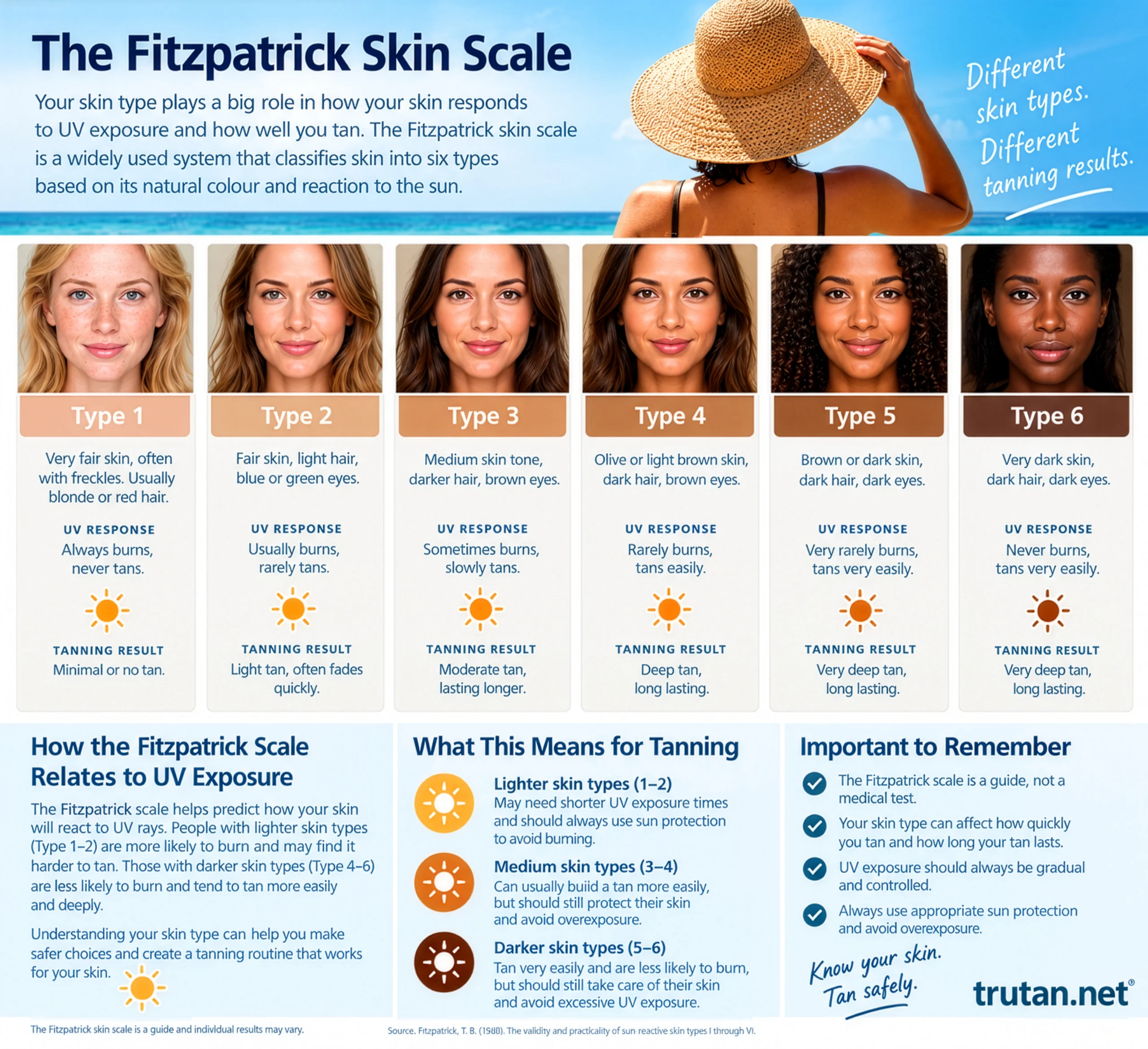
The Fitzpatrick scale divides skin into six different skin types, from Type I, which generally burns very easily and rarely tans, through to Type VI, which generally tans very easily and is much less likely to burn.
Understanding where you fit on the Fitzpatrick scale can provide useful information about your likely response to UV exposure and why tanning results can vary significantly from person to person.
What Is the Fitzpatrick Skin Scale?
The Fitzpatrick Skin Type Scale was developed by dermatologist Thomas B. Fitzpatrick to classify how different skin types respond to ultraviolet radiation, particularly their tendency to burn or tan.
The six categories range from:
- Type I – Very fair skin that almost always burns and rarely tans
- Type II – Fair skin that usually burns and tans only slightly
- Type III – Medium skin that sometimes burns and gradually tans
- Type IV – Olive or light brown skin that rarely burns and tans easily
- Type V – Brown skin that very rarely burns and tans deeply
- Type VI – Very dark skin that generally does not burn and tans very easily
The Fitzpatrick scale is a useful classification system, but it is not a measurement of how much UV exposure is safe for an individual.

The Six Fitzpatrick Skin Types
Fitzpatrick Type I
Type I generally describes very fair skin, often accompanied by freckles, light-coloured eyes and blonde or red hair.
People with Type I skin typically:
- Burn very easily
- Rarely develop a conventional suntan
- Have high sensitivity to UV radiation
- May develop redness quickly following UV exposure
If you have Type I skin, it is particularly important to minimise unnecessary UV exposure and use appropriate sun protection.
Fitzpatrick Type II
Type II skin is generally fair or light in colour.
People with Type II skin may:
- Usually burn when exposed to UV radiation
- Develop only a light tan
- Take longer to develop visible pigmentation
- Remain relatively sensitive to UV exposure
Although Type II skin may tan, burning should never be considered a necessary stage of developing a tan.
Fitzpatrick Type III
Type III is often associated with medium or light brown skin.
People with Type III skin generally:
- Sometimes burn
- Usually develop a gradual tan
- Can develop moderate pigmentation with repeated exposure
- Have more natural pigmentation than Types I and II
However, Type III skin can still be damaged by excessive UV exposure.
Fitzpatrick Type IV
Type IV skin is commonly described as olive or light brown.
People with Type IV skin generally:
- Rarely burn
- Tan relatively easily
- Can develop deeper pigmentation
- Have greater natural levels of melanin
Being less likely to burn does not mean UV exposure is harmless.
Fitzpatrick Type V
Type V generally describes brown or dark brown skin.
People with Type V skin typically:
- Very rarely burn
- Tan easily
- Develop a deep tan
- Have higher levels of melanin
However, increased pigmentation does not provide complete protection against UV-related skin damage.
Fitzpatrick Type VI
Type VI generally describes very dark brown or black skin.
People with Type VI skin usually:
- Rarely experience visible sunburn
- Tan very easily
- Have high levels of melanin
- Have significant natural pigmentation
It is still important to protect the skin from excessive UV exposure.
How Does Skin Type Affect Tanning?
One of the key factors involved in tanning is melanin.
Melanin is the pigment responsible for much of the colour in our skin, hair and eyes. UV exposure can stimulate melanocytes, the cells responsible for producing melanin, resulting in increased pigmentation.
This is one of the processes responsible for the development of a suntan.
Generally, people with Fitzpatrick Types I and II have less natural pigmentation and are more likely to burn before developing significant visible colour.
People with Types III and IV generally have a greater ability to develop visible pigmentation.
Types V and VI naturally have higher levels of melanin and generally develop pigmentation more readily.
However, your Fitzpatrick type does not determine exactly how you will tan. Genetics, age, previous UV exposure, location, season and individual biology can all influence your results.
Melanotan II and Melanin Production
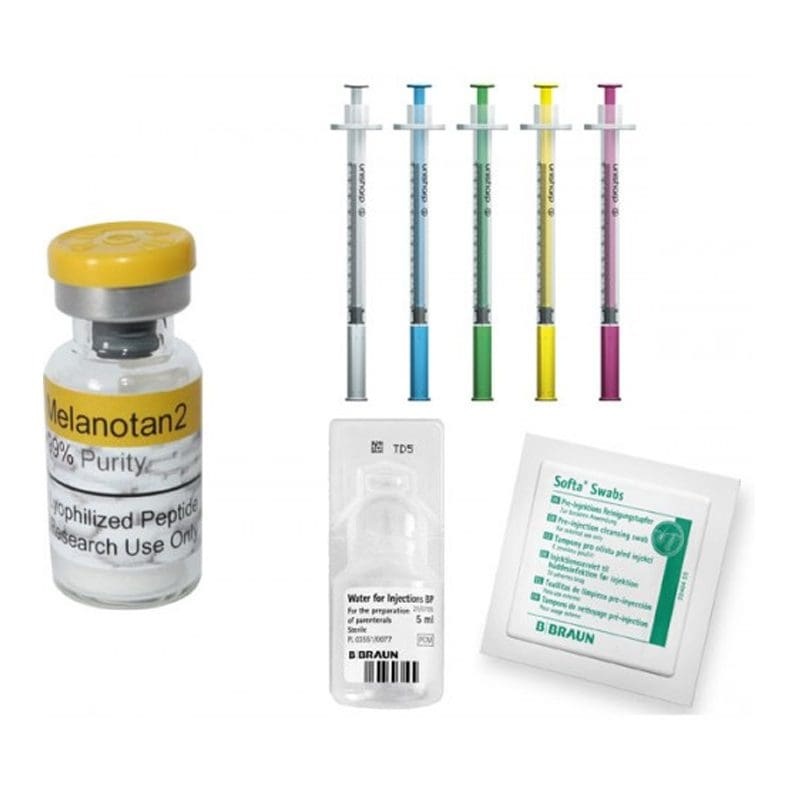
Melanotan 2 is a synthetic peptide that has been studied because of its relationship with the body’s melanocortin system and melanin production.
Unlike conventional tanning products that simply colour the surface of the skin, Melanotan II has been investigated for its ability to stimulate melanogenesis — the biological process through which melanocytes produce melanin.
This is particularly relevant when discussing people with lighter Fitzpatrick skin types.
Someone with Fitzpatrick Type I or Type II skin may naturally have a limited tanning response. They may burn easily and develop relatively little pigmentation following UV exposure.
Because Melanotan II has been investigated for its ability to stimulate melanin production, it has attracted interest from people with fair skin who find it difficult to develop a visible tan.
The proposed idea is that increasing melanin production could allow some individuals who naturally produce less pigment to develop greater skin pigmentation.
Can Melanotan 2 Help Fair Skin Tan?
Melanotan 2 has been investigated for its ability to stimulate melanin production, which is why it has become associated with tanning.
For someone at the lower end of the Fitzpatrick scale, particularly Types I and II, this is potentially significant because these skin types generally produce less melanin and have a greater tendency to burn rather than tan.
However, it is important to distinguish between biological potential and established clinical use.
There is not an established, licensed UK treatment pathway in which Melanotan II is prescribed simply to help someone achieve a cosmetic tan.
For this reason, claims that Melanotan II will reliably allow a Type I or Type II individual to achieve a particular level of tanning should be treated cautiously.
Melanotan II Does Not Make UV Exposure Safe
This is one of the most important points to understand.
Even if a person develops more visible pigmentation, this does not mean that their skin is protected from UV radiation.
A tan produced by UV exposure is itself a biological response to UV damage. The FDA notes that increased melanin following UV exposure is a sign of skin damage and that a tan does not provide meaningful protection against sunburn or other UV-related damage.
Therefore, developing more pigment should never be used as a reason to increase UV exposure.
Melanotan II should not be considered a substitute for sunscreen, protective clothing, shade or other appropriate UV-protection measures.
Why Fitzpatrick Type Matters When Understanding Tanning
The Fitzpatrick scale helps explain why two people can experience very different results from the same UV exposure.
For example:
Type I:
Very likely to burn and may develop little visible tan.
Type II:
Likely to burn but may develop some pigmentation with repeated exposure.
Type III:
More likely to develop a gradual tan.
Type IV:
Generally tans more easily and burns less frequently.
Type V–VI:
Generally have higher natural pigmentation and develop visible colour more readily.
Melanin production is therefore an important part of understanding individual tanning differences.
More about the Fitzpatrick Scale
Does a Tan Protect You From UV?
No.
A visible tan should not be regarded as a protective barrier against UV radiation.
Even naturally darker skin can experience UV-related damage, and developing additional pigmentation does not eliminate the risks associated with excessive UV exposure.
This is particularly important when discussing products or substances that may increase pigmentation.
A darker appearance does not necessarily mean that the skin is healthier or better protected.
Melanotan II: Important Considerations
If you are researching Melanotan 2 because you have fair skin and struggle to tan, it is important to understand its regulatory status before making any decision.
This means consumers should be particularly cautious about products purchased online, especially where sellers make claims about safety, UV protection, skin-cancer prevention or guaranteed tanning results.
Melanotan II should never be presented as providing protection from UV radiation.
Understanding Your Skin Before You Tan
Knowing your Fitzpatrick skin type can provide a useful starting point for understanding your natural tanning characteristics.
If you are Type I or II, you may naturally produce less melanin and be more susceptible to burning.
If you are Type III or IV, you may find that your skin develops visible pigmentation more readily.
Types V and VI generally have higher natural pigmentation, although this does not make the skin immune to UV damage.
Melanotan II has attracted interest because of its effect on melanin production, particularly among people who naturally struggle to develop pigmentation. However, its status as an unauthorised medicine means that claims about its cosmetic tanning benefits should be approached with caution.
The Fitzpatrick Scale: A Quick Guide
| Skin Type | Typical Characteristics | Typical UV Response | Tanning Tendency |
|---|---|---|---|
| Type I | Very fair, often freckles | Almost always burns | Minimal or no tan |
| Type II | Fair | Usually burns | Tans gradually |
| Type III | Medium | Sometimes burns | Moderate tanning |
| Type IV | Olive/light brown | Rarely burns | Tans easily |
| Type V | Brown/dark brown | Very rarely burns | Tans deeply |
| Type VI | Very dark brown/black | Rarely burns | Tans very easily |
These descriptions are generalisations and individual responses can vary.
Know Your Skin. Understand Your Tan.
The Fitzpatrick Skin Scale provides a useful way to understand the relationship between skin type, melanin, UV exposure, burning and tanning.
For people with fair Fitzpatrick Types I and II, developing a natural-looking tan can be more difficult because their skin generally contains less melanin and is more likely to burn following UV exposure.
Melanotan II has attracted interest because it has been investigated for its ability to stimulate melanin production. However, it is important to distinguish this scientific interest from an approved medical or cosmetic treatment.
Most importantly, increasing pigmentation does not make UV exposure safe.
Understanding your skin type, understanding how melanin works and taking a responsible approach to UV exposure are all important when considering your tanning routine.
Know your skin. Understand your tanning results. Tan responsibly.
About TruTan
TruTan provides information and products for people interested in tanning and pigmentation. Our aim is to provide clear information so customers can better understand their skin, tanning results and the factors that influence pigmentation.
Always research any tanning product carefully and seek advice from a qualified healthcare professional if you have concerns about your skin or the use of Melanotan II.
Related Posts

This Post Has 0 Comments