
Melanotan 2 Results & Skin Types
If you’ve been researching Melanotan 2, you may have noticed that results can vary considerably from one person to another.
Some people develop visible pigmentation relatively quickly, while others may see a more gradual change. Skin type is one of the important factors that can influence how pigmentation develops.
Understanding your natural skin type, your existing level of melanin and how your skin responds to sunlight can help explain why Melanotan 2 results are different for everyone.
In this guide, we’ll look at the relationship between skin type and pigmentation, explain the science behind Melanotan 2 and introduce the TruTan Melanotan 2 range.
What is Melanotan 2?
Melanotan 2 (MT2) is a synthetic peptide related to alpha-melanocyte-stimulating hormone (α-MSH), a naturally occurring hormone involved in the body’s pigmentation pathway.
Melanotan 2 interacts with melanocortin receptors, including the MC1R receptor, found on melanocytes.
Melanocytes are the cells responsible for producing melanin, the pigment that gives your skin its colour.
In simplified terms, the process can be described as:
Melanotan 2 → melanocortin receptor signalling → melanocyte activity → increased melanin production → increased pigmentation
This is why Melanotan 2 has attracted interest among people looking for information about tanning peptides.
Why does skin type matter?
Not everyone’s skin produces the same amount or type of melanin.
Your natural pigmentation is influenced by genetics, including variations in the MC1R pathway. These differences help explain why some people burn easily and struggle to tan, while others develop a deeper tan relatively easily.
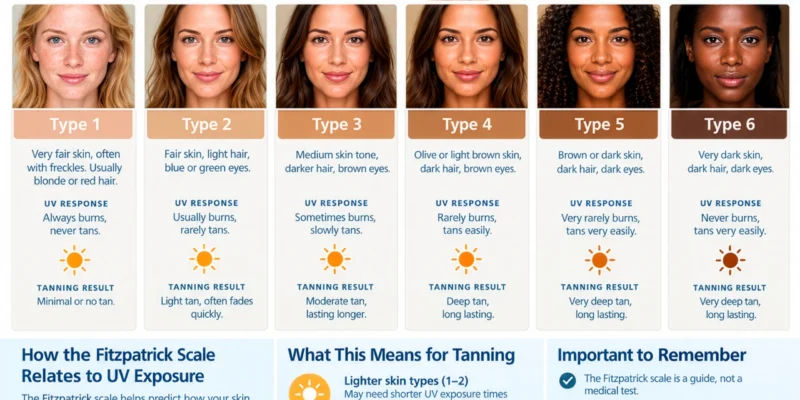
The Fitzpatrick skin-type classification is commonly used to describe how skin responds to UV exposure.
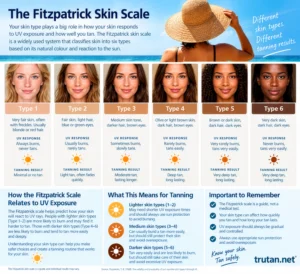
It ranges from Type I through Type VI.
Fitzpatrick Type I
Very fair skin that generally burns easily and tans very little.
People with Type I skin typically have relatively low baseline pigmentation.
Fitzpatrick Type II
Fair skin that usually burns easily but may develop some pigmentation with exposure.
Fitzpatrick Type III
Medium or light skin that can burn moderately but generally develops a gradual tan.
Fitzpatrick Type IV
Olive or light-brown skin that tends to tan relatively easily and usually burns less readily.
Fitzpatrick Type V
Brown skin with a higher level of natural pigmentation and a tendency to tan deeply.
Fitzpatrick Type VI
Deeply pigmented skin that generally has a high baseline level of melanin.
These categories are useful for understanding natural tanning behaviour, but they cannot predict exactly how an individual will respond to Melanotan 2.
How does Melanotan 2 interact with your skin?
Melanotan 2 is designed to interact with the melanocortin system.
One of the most important receptors involved is MC1R, which plays a significant role in regulating melanin production.
When this pathway is activated, signalling within melanocytes can promote the production of melanin.
However, the response is not identical in every person.
Your genetics, baseline pigmentation and individual biology can all influence the eventual appearance of your skin.
This means that two people using the same Melanotan 2 product may experience noticeably different pigmentation.
Melanotan 2 and fair skin
People with very fair skin often have a relatively low baseline level of melanin.
As a result, even a relatively modest change in pigmentation may be visually noticeable.
Fair skin can also make uneven pigmentation, freckles or changes in existing moles more apparent.
Anyone considering Melanotan 2 should therefore pay particular attention to changes in pigmentation and seek medical advice if they notice a new or changing mole.
Melanotan 2 and medium skin tones
People with Fitzpatrick Type III or IV skin generally have more baseline pigmentation.
Because there is already more melanin present, changes in colour may appear differently compared with someone with very fair skin.
The resulting appearance can also depend on natural skin tone, genetics and individual response.
It is important not to assume that a particular skin type guarantees a particular Melanotan 2 result.
Melanotan 2 and darker skin tones
People with Fitzpatrick Type V or VI skin already have higher levels of natural pigmentation.
Consequently, changes caused by additional melanin production may be less visually dramatic.
Again, individual results can vary considerably.
The important point is that skin type influences the starting point, rather than providing a guaranteed prediction of the final result.
Why does Melanotan 2 affect everyone differently?
There are several reasons.
Genetics
Your genes influence how your melanocytes function and how your skin responds to melanocortin signalling.
Baseline melanin
Someone with naturally fair skin starts with a different level of pigmentation from someone with naturally darker skin.
Melanin type
Skin produces different forms of melanin, with the balance between eumelanin and pheomelanin contributing to differences in pigmentation and appearance.
Individual response
Even people with apparently similar skin types can respond differently to the same substance.
UV exposure
Melanotan 2 should not be regarded as a replacement for sun protection.
UV exposure remains a separate factor in tanning and skin damage, and deliberately increasing UV exposure is not a safe way to enhance a tan.
Does Melanotan 2 work without UV exposure?
This is an important distinction.
Melanotan 2 is associated with stimulation of the body’s melanin-production pathway, but it should not be considered a sunscreen or a substitute for UV protection.
The amount and appearance of pigmentation that develops can vary between individuals.
More importantly, a darker appearance does not eliminate the harmful effects of ultraviolet radiation.
If you are exposed to sunlight, appropriate sun protection remains important.
Why you shouldn’t compare your Melanotan 2 results with someone else’s
It can be tempting to compare photographs online and assume that you should achieve the same result.
This can be misleading.
Someone with naturally fair skin may show a dramatic visual difference after developing additional pigmentation, while someone with naturally darker skin may experience a change that is much less obvious.
Age, genetics, existing pigmentation, sun exposure and many other individual factors can also influence appearance.
Rather than comparing yourself with another person, it is more useful to understand your own natural skin characteristics.
Choosing Melanotan 2 products from TruTan
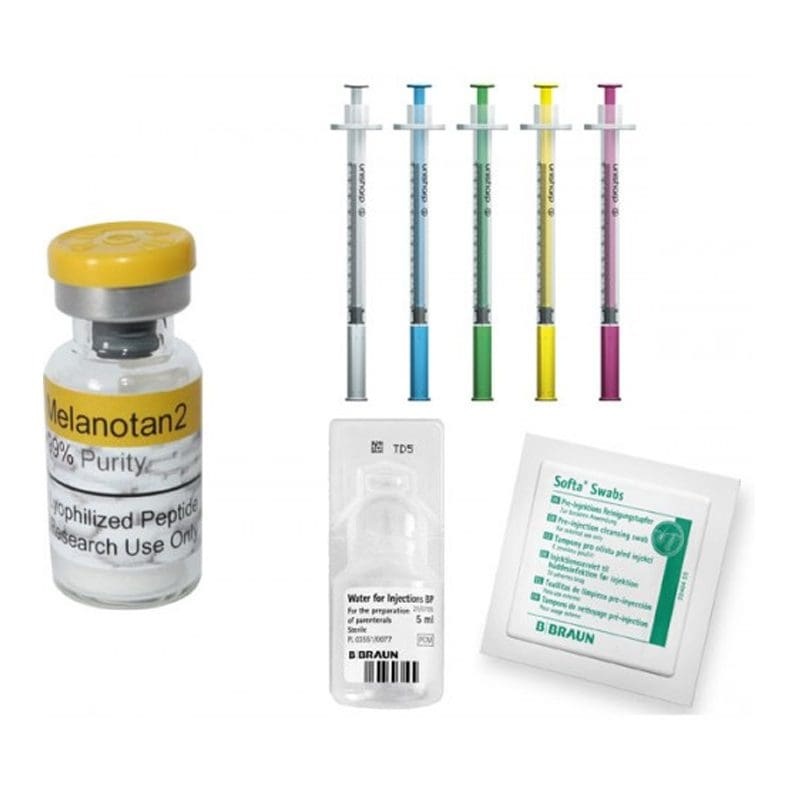
For people researching Melanotan 2 products, TruTan offers a range of formats including Melanotan 2 vials, multi-vial options and nasal spray kits.
The range gives customers different product formats to research depending on their preferences.
TruTan Melanotan 2 vials
TruTan offers individual Melanotan 2 vials as well as larger multi-vial options.
These products are intended for customers specifically researching Melanotan 2 and peptide tanning products.
TruTan Melanotan 2 nasal spray kits
TruTan also offers nasal spray kits for customers interested in a needle-free format.
The two formats are different ways of administering a Melanotan 2 product, and customers should carefully research the differences before making a decision.
Does a higher dose mean a better result?
Not necessarily.
It is important not to assume that increasing the amount of a peptide will automatically produce a better-looking tan.
Melanotan 2 is not an authorised tanning medicine in the UK, and its safety and long-term effects have not been adequately established.
TruTan itself notes that Melanotan 2 is not licensed for cosmetic use and that results can vary between individuals.
Anyone considering its use should understand the regulatory and health considerations and discuss concerns with an appropriately qualified healthcare professional.
Monitoring changes in your skin
Because Melanotan 2 can affect pigmentation, it is sensible to pay attention to changes in your skin.
In particular, keep an eye on freckles and moles.
Seek medical advice if you notice a mole that:
- Changes size
- Changes shape
- Develops irregular borders
- Changes colour
- Becomes asymmetrical
- Bleeds or develops other unusual symptoms
The ABCDE approach — asymmetry, border, colour, diameter and evolving appearance — is commonly used when assessing potentially concerning moles.
If you’re worried about a skin lesion, don’t rely on photographs or online information. Speak to your GP or a qualified dermatologist.
Skin type doesn’t determine everything
Your Fitzpatrick skin type can provide a useful starting point, but it doesn’t tell the whole story.
Two people with the same Fitzpatrick classification can still have different:
- Natural skin pigmentation
- Genetic characteristics
- Melanin production
- MC1R activity
- UV sensitivity
- Tanning history
- Responses to Melanotan 2
This is why there is no universal Melanotan 2 result.
Melanotan 2: the key takeaway
Skin type can have a significant influence on how pigmentation appears, but it cannot guarantee a particular Melanotan 2 result.
Fairer skin starts with less natural pigmentation, so changes may be more noticeable. Medium skin tones may develop a more gradual change, while naturally darker skin already has a higher baseline level of melanin.
Melanotan 2 interacts with the melanocortin system and is associated with stimulation of melanin production, but individual results vary.
If you are researching Melanotan 2 products, the TruTan range includes Melanotan 2 vials, multi-vial options and nasal spray kits for you to research.
However, Melanotan 2 is not an authorised cosmetic tanning medicine in the UK, and its long-term safety has not been established. It should never be considered a substitute for sunscreen or safe UV practices.
Frequently Asked Questions about Melanotan 2
Does skin type affect results?
Yes. Natural pigmentation, genetics and melanocortin receptor activity can all contribute to differences in how an individual responds.
Which skin type responds best ?
There is no single skin type that can be guaranteed to respond “best”. Everyone’s biology is different, and visible results can vary considerably.
Does it work better on fair skin?
Fair skin generally has less baseline pigmentation, so changes in colour may be more noticeable. This does not mean that fair-skinned people will necessarily achieve better or faster results.
Does Melanotan 2 change your natural skin colour?
Melanotan 2 is associated with increased melanin production and therefore can cause changes in pigmentation. The extent of any change varies between individuals.
Does it replace sunscreen?
No. Melanotan 2 is not sunscreen and does not eliminate the risks associated with UV exposure.
Where can I find high quality products?
TruTan offers a range of Melanotan 2 products, including individual vials, multi-vial options and nasal spray kits.
Disclaimer: This article is provided for general information and educational purposes only. It is not medical advice and does not recommend the use of Melanotan 2. Melanotan 2 is not an authorised cosmetic tanning medicine in the UK. If you have concerns about your skin, pigmentation or any changing mole, consult a qualified healthcare professional.
Related Posts


This Post Has 0 Comments