
Nasal Tanner Labels: Bottles, Kits, Volumes and Vial Counts
Nasal product names can refer to a bottle, a bundle of components or several complete kits. Those are different order units. A number beside “bottle” should not be read as the number of kits, and a volume does not establish a vial count or the amount of a substance.
The Melanotan 2 product overview distinguishes the catalogue formats. This guide concentrates on the labels you see within nasal listings.
Identify what the noun is counting
| Label | What to establish |
|---|---|
| Bottle count | How many containers are listed |
| Kit count | How many bundles are being ordered |
| Vial count | How many vials are included in those bundles |
| Volume in ml | Which container or liquid the stated volume describes |
| Amount in mg | Which item or total the stated mass describes |
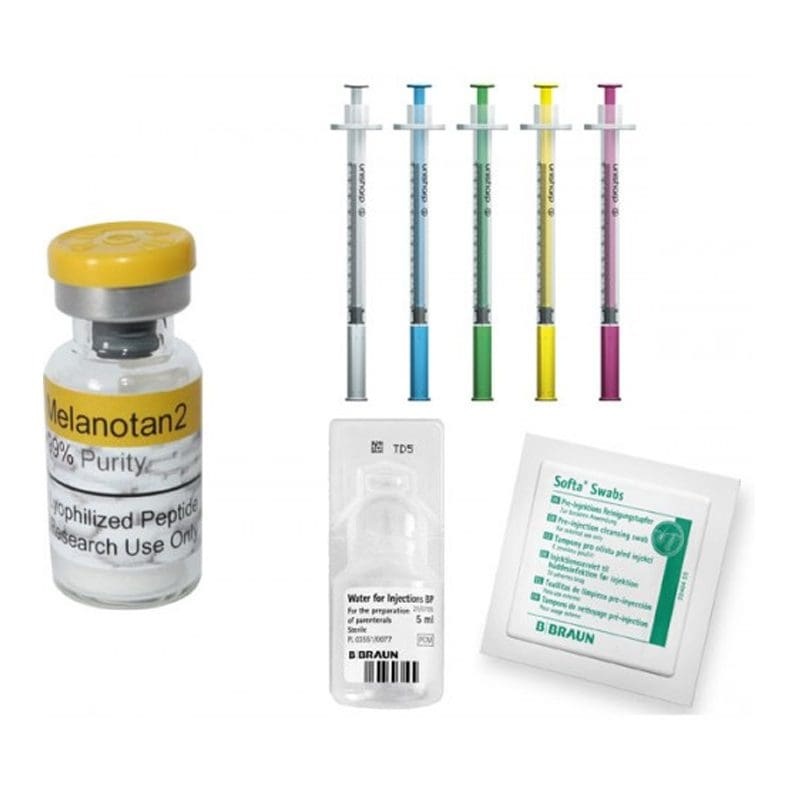
Read the component list before making conversions. One kit can include more than one vial, so one kit should not automatically be counted as one vial. The nasal kit component explanation identifies the different item types.
Do not treat container capacity as contents
A bottle description can refer to the container itself. It does not automatically describe a filled product. The word “empty” is therefore material when it appears in a listing. A photograph of a spray bottle does not establish whether anything is supplied inside it.
Even where a volume is stated, establish what it refers to. A container capacity, a supplied water volume and the amount of a substance answer different questions. Do not derive an amount per spray or a number of applications from a bottle size alone.
Read the pack quantity separately
A pack containing two kits repeats the stated bundle count; it is not the same description as a kit containing two vials. This difference is especially easy to miss when both product names start with a number.
The one, two and three nasal kit quantity comparison provides the existing pack counts. Use that reference for the numerical inventory, then check the current selected product before relying on it for an order.
Recognise where the label stops being evidence
Words such as “kit”, “spray” or “ready” do not by themselves establish that a product is premixed, suitable for a person or capable of producing a particular result. A contents statement should be checked against the itemised description.
If a listing appears to make a broader promise, separate the observable product detail from the conclusion being suggested. The guide to reading nasal product claims explains this distinction without treating a product name as proof of performance. Where the meaning of a label remains unclear, retain the exact listing details and ask for clarification rather than guessing.
Related Posts


This Post Has 0 Comments